Informes y análisis de la industria de la construcción modular
El Modular Building Institute recopila y distribuye información estadística sobre el tamaño y el crecimiento del análisis del sector de la construcción modular. Estos informes se han convertido en la principal fuente de información sobre el sector y son utilizados en todo el mundo por empresas de inversión, bancos, medios de comunicación, investigadores, consultores y estudiantes.
El contenido incluye descripciones generales del sector, pisos entregados, ventas brutas, ventas por segmento de mercado, ingresos brutos de los distribuidores, composición de la flota de alquiler, venta de unidades usadas, datos de fabricación del sector, estimaciones del sector y gráficos de edificios modulares contemporáneos. Redactados de forma concisa, estos informes están repletos de información interesante y útil.
2026 Modular Construction Industry Reports
The Modular Building Institute's 2026 Modular Construction Industry Reports are now available! Get the latest and best available information and data showing modular industry trends, growth instigators, and best practices for permanent modular construction and relocatable buildings across North America.
No se lo pierda: estos datos no están disponibles en ningún otro sitio.
MBI members: Login to download these reports for FREE | Not a member? Join today!
Informe sobre la industria de la construcción modular permanente en EE.UU.
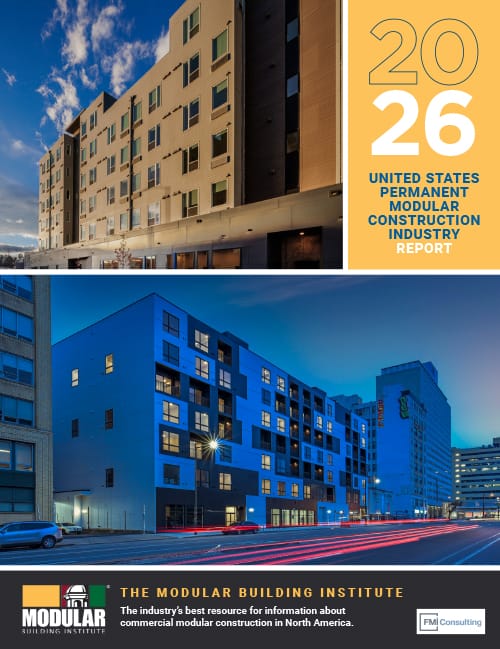
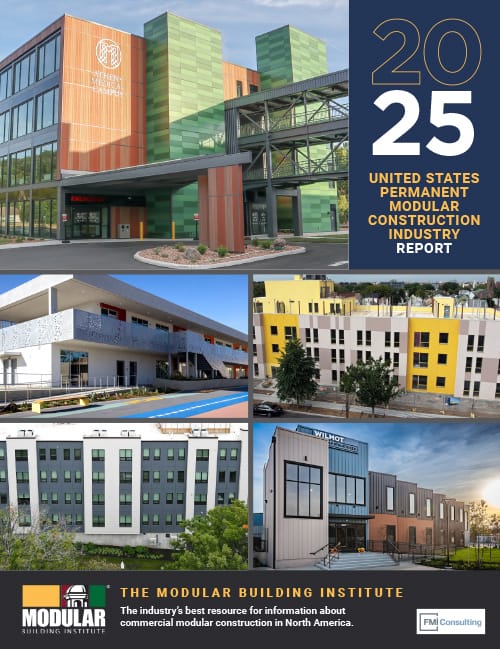
2026 UNITED STATES PERMANENT MODULAR CONSTRUCTION INDUSTRY REPORT
Este exhaustivo análisis, elaborado en colaboración con FMI Consulting, se centra en los resultados económicos, las tendencias y las previsiones de la construcción modular permanente en Estados Unidos. El informe refleja metodologías actualizadas, análisis regionales mejorados y datos sólidos procedentes de fuentes primarias y secundarias.
Resumen ejecutivo
Commercial modular construction continues to gain momentum as owners and developers look for faster, more predictable ways to deliver projects in a challenging market. While higher interest rates have slowed some new construction activity, the long-term outlook for modular remains strong because it directly addresses many of the industry’s biggest challenges: labor shortages, rising costs, compressed schedules, inconsistent project delivery, and the need for greater certainty.
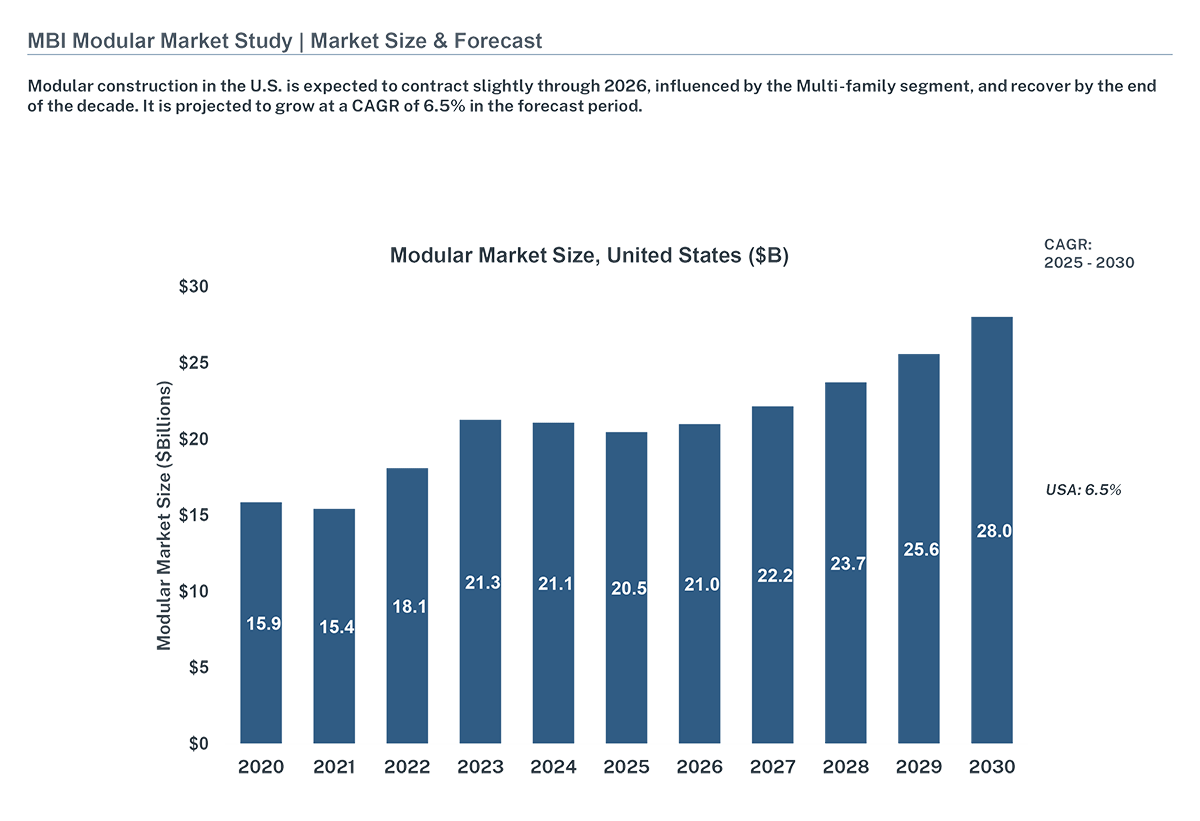
This report examines where the U.S. permanent modular market stands today, where it is headed, and which sectors offer the greatest opportunities over the next five years. The U.S. market reached $20.5 billion in 2025, representing about 5.1% of construction activity in key segments, and is projected to grow at a 6.5% compound annual growth rate through 2030. The report also explores the economic and regulatory forces shaping adoption, regional market trends, and the advantages that continue to make modular an increasingly attractive delivery method.
Among the report's key findings:
- Multifamily residential remains the industry's largest market driven by housing affordability challenges, urban migration, and skilled labor shortages.
- Office and data centers represent a rapidly emerging opportunity for modular solutions that prioritize speed, quality, and predictable delivery
- The U.S. West leads in market size due to housing affordability and disaster recovery needs
Beyond market data, the report explains why developers, architects, and manufacturers are increasingly turning to modular construction. It highlights how factory production can reduce project timelines by 20-50%, improve quality control, create greater cost certainty, reduce onsite disruption, and help projects reach occupancy sooner. It also identifies the obstacles that still limit wider adoption—including financing, permitting, inconsistent project pipelines, and industry education—and outlines where the greatest opportunities for future growth exist across the United States.
MBI members: Login to download these reports for FREE | Not a member? Join today!
Informe sobre edificios reubicables
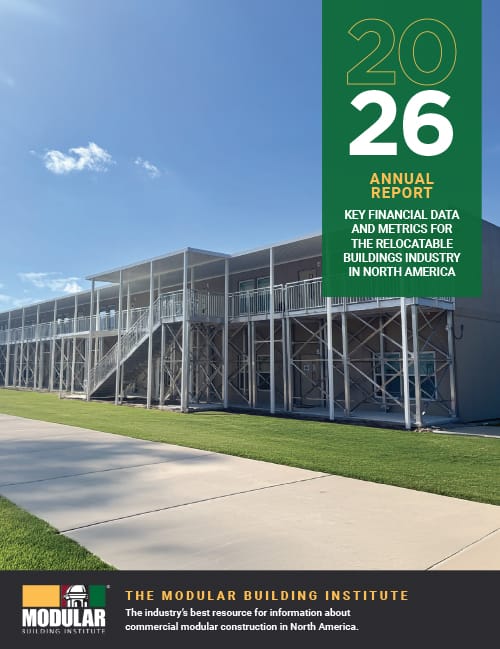
2026 RELOCATABLE BUILDINGS INDUSTRY IN NORTH AMERICA REPORT
The relocatable buildings industry in North America continues to play a crucial role in providing temporary and flexible space solutions for sectors like education, construction, healthcare, and disaster relief.
Resumen ejecutivo
The 2026 relocatable buildings report presents an industry that has moved well beyond “temporary space.” Across North America, relocatable buildings function as flexible infrastructure for education, construction, healthcare, workforce housing, disaster response, retail, industrial, and administrative uses.
The market is mature, stable, and increasingly strategic. Rather than expanding mainly by adding more units, the industry is creating value through stronger utilization, broader applications, recurring rental income, sales, and service-based offerings. The report also shows an industry with significant private fleet ownership, strong public-sector demand, and a business model that remains resilient.
Key findings include:
- The industry continues to show steady demand and healthy fleet utilization.
- Revenue remains strong and diversified, supported by rentals, new and used unit sales, transportation, installation, and other value-added services.
- Education and construction remain the anchor markets, while healthcare, disaster response, retail, workforce housing, and industrial applications are becoming more important growth areas.
- Relocatable buildings continue to perform well as long-term assets because they can be leased, reused, relocated, refurbished, and resold.
- The market is shifting from a traditional rental business toward a broader “space-as-a-service” model that helps customers solve immediate and evolving space needs.
The report also explains why demand should remain strong through 2030. Population growth, aging infrastructure, school capacity challenges, healthcare flexibility, workforce housing shortages, and climate-related disaster response all favor fast, reusable, code-compliant building solutions. These forces make relocatable buildings increasingly relevant for both short-term needs and long-term infrastructure planning.
MBI members: Login to download these reports for FREE | Not a member? Join today!
Informe sobre la industria modular canadiense
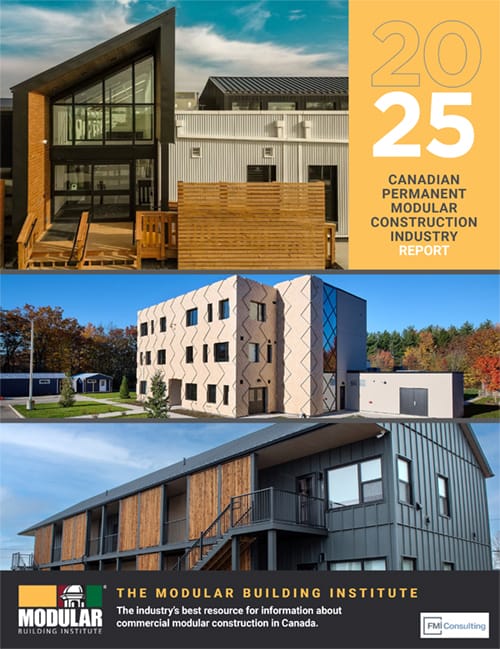
INFORME SOBRE LA INDUSTRIA CANADIENSE DE LA CONSTRUCCIÓN MODULAR 2025
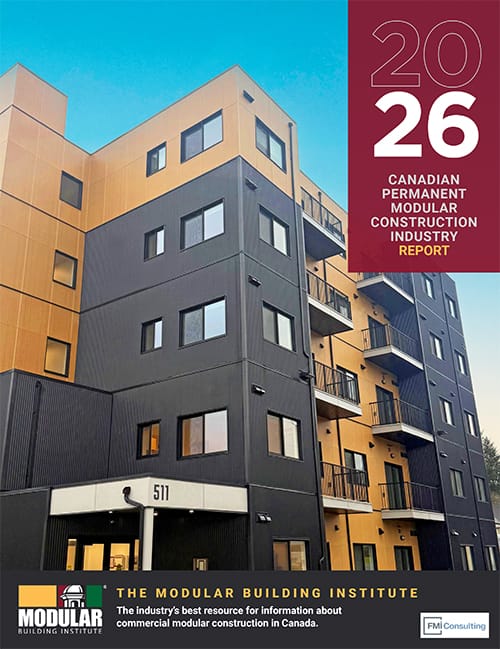
In spring 2025, the Modular Building Institute and FMI Consulting began a collaborative effort to provide current, detailed, and actionable market insights. The outcome of that partnership, this 2026 report is intended to provide a means to measure and monitor changes across the industry, specifically describing five-year historical and five-year forecast data.
Resumen ejecutivo
The 2026 Canadian Permanent Modular Construction Industry Report shows a market with strong momentum, growing policy support, and clear long-term opportunity. Modular construction is increasingly being viewed as a practical solution to Canada’s most urgent building challenges, including housing affordability, labor shortages, aging infrastructure, climate resilience, and the need for faster project delivery.
The Canadian modular construction market now represents about 5.5% of the overall Canadian construction market and is projected to outpace traditional construction by a full percentage point. That gap matters because it signals that modular is not just growing with the market; it is gaining share.
Key findings include:
- Multifamily residential is the strongest segment, accounting for nearly half of Canada’s projected modular market. It also has the highest projected growth rate at 7.3%, driven by housing affordability pressures, urban migration, and population growth in major metro areas.
- Commercial and education remain important markets, supported by demand for flexible commercial space, institutional facilities, and faster delivery in communities facing capacity constraints.
- Lodging offers a smaller but attractive opportunity, especially for extended-stay projects and workforce-related demand in areas tied to manufacturing, industrial activity, and remote-site development.
- Healthcare and public infrastructure present long-term potential, particularly in rural and remote regions where traditional construction can be slowed by labor shortages, site logistics, and limited local capacity.
The report also highlights major tailwinds, including the Build Canada Homes initiative, broader provincial and institutional adoption, and efforts to harmonize codes and standards through CSA frameworks. At the same time, it is clear about the barriers: financing gaps, inconsistent project pipelines, design coordination issues, limited modular experience among some project teams, and lingering misconceptions about quality and appearance.
MBI members: Login to download these reports for FREE | Not a member? Join today!
Informes anteriores sobre la industria
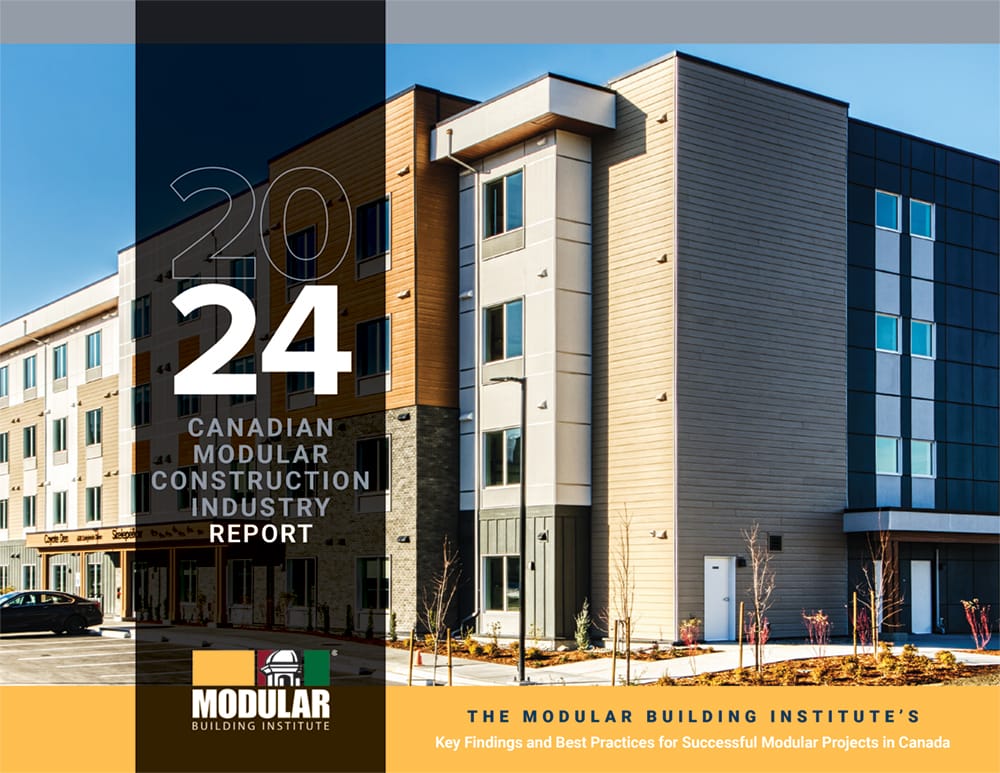
Looking for additional data? MBI's 2025, 2024, 2023, and 2022 reports are available below. For older modular construction reports, contact us.
United States Permanent Modular Construction Reports
La construcción modular permanente (PMC) es un método de construcción innovador y sostenible que utiliza técnicas de fabricación ajustada fuera de la obra para prefabricar soluciones de edificios completos de una o varias plantas en secciones modulares entregables. Los módulos de PMC pueden integrarse en proyectos construidos in situ o funcionar por sí solos como una solución llave en mano y pueden entregarse con MEP, instalaciones y acabados interiores en menos tiempo, con menos residuos y un mayor control de calidad en comparación con los proyectos que utilizan únicamente la construcción in situ. Recientes estudios sobre el análisis de la construcción de edificios modulares han demostrado que la construcción modular es un proceso de construcción eficiente y que puede contribuir al crecimiento del sector de la construcción.
North American Relocatable Buildings Reports
Un edificio reubicable (Relocatable Building, RB) es un edificio parcial o totalmente montado que cumple los códigos o reglamentos estatales aplicables y que se construye en una instalación de fabricación de edificios mediante un proceso de construcción modular. Las construcciones reubicables están diseñadas para volverse a utilizar o cambiar su propósito varias veces y transportarse a distintos sitios. Se utilizan en escuelas, oficinas de sitios de construcción, clínicas médicas, centros de ventas y en cualquier aplicación en la que un edificio reubicable pueda satisfacer una necesidad temporal de espacio. Estos edificios ofrecen una entrega rápida, facilidad de traslado, reconfiguración a bajo costo, plazos de amortización acelerados y gran flexibilidad. Las construcciones reubicables no se fijan de forma permanente al inmueble, sino que se instalan de acuerdo con las directrices de instalación del fabricante y los requisitos de los códigos locales. Estos edificios son esenciales en los casos en que se necesita rapidez, espacio temporal y capacidad de reubicación.
Informes sobre construcción modular permanente en Canadá
Nota: Los informes de la industria canadiense no están disponibles para 2023 y 2022.