
Salen a la calle 1.000 millones de dólares para financiar la iniciativa canadiense de viviendas rápidas modulares
Durante los dos últimos años, la MBI y sus miembros han trabajado con la Canadian Mortgage Housing Corporation (CMHC) para abrir oportunidades a los proyectos modulares de vivienda social en Canadá. El reto, según la CMHC, es que "lo modular no encaja en nuestro perfil tradicional de suscripción y financiación."
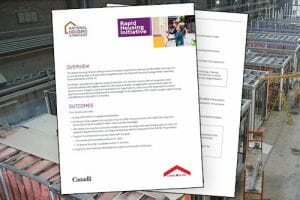
MBI ha podido trabajar con CMHC para desarrollar nuevas directrices de suscripción específicas para proyectos modulares. Según una reunión mantenida a finales de octubre con la CMHC, se espera que estas directrices estén disponibles y en vigor a finales de 2020. Pero la noticia más importante para el sector es el reciente anuncio de la CMHC sobre su "Iniciativa de Vivienda Rápida (RHI)".
El Gobierno de Canadá, a través de la CMHC, ha puesto en marcha el RHI como un programa de 1.000 millones de dólares que utiliza únicamente la construcción modular para ayudar a hacer frente a las necesidades urgentes de vivienda de los canadienses vulnerables, especialmente en el contexto de COVID-19, mediante la construcción rápida de viviendas asequibles. La iniciativa proporciona aportaciones de capital (tras la firma de un acuerdo de financiación con la CMHC) en virtud de dos flujos para acelerar la entrega de viviendas asequibles.
El RHI lo hará:
- Apoyar la creación de hasta 3.000 nuevas viviendas asequibles permanentes.
- Cubrir la construcción de viviendas modulares, así como la adquisición de terrenos y la conversión/rehabilitación de edificios existentes en viviendas asequibles.
- El objetivo es comprometer todos los fondos antes del 31 de marzo de 2021 y garantizar que las viviendas estén disponibles en los 12 meses siguientes a la firma de los acuerdos.
Las solicitudes de proyectos deben ser presentadas por las ciudades en asociación con un promotor/constructor antes del 31 de diciembre de 2020.
RHI proporcionará financiación en dos flujos, cada uno con 500 millones de dólares en fondos disponibles. En el primer flujo, el RHI agilizará la entrega de fondos a municipios previamente identificados con el mayor número de inquilinos con graves necesidades de vivienda y de personas sin hogar. Para el segundo flujo, se abrirá un portal de solicitudes para municipios, provincias y territorios, órganos de gobierno y organizaciones indígenas, y organizaciones sin ánimo de lucro, en el que se dará prioridad a las solicitudes en función de su solidez.
MBI ha elaborado un directorio de fabricantes canadienses con el propósito expreso de ayudar a los responsables de la toma de decisiones a localizar empresas modulares cualificadas con las que asociarse.
MBI también se está dirigiendo directamente a los municipios previamente identificados para ofrecerles recursos y asistencia con el fin de garantizar el éxito de estos proyectos modulares. Si está interesado en participar en esta iniciativa de vivienda, visite esta página para obtener más detalles: https: //www.cmhc-schl.gc.ca/en/nhs/rapid-housing-initiative.
MBI ha identificado el sector de la vivienda multifamiliar, social y asequible como una de las mayores oportunidades de crecimiento para la industria. Este trabajo con CMHC encaja con el trabajo recientemente completado que MBI hizo con Fannie Mae en el desarrollo de su Multifamily Modular Construction Toolkit.
Un agradecimiento especial a Joseph Kiss, de Horizon North, miembro de MBI, por su ayuda en este esfuerzo.
Más de Modular Advantage
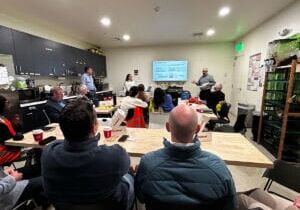
MBI Town Halls 2026: Reflections from Boston
By the end of 2026 MBI’s Government Affairs team will have traveled over 6,000 air miles to bring Town Hall events to five different cities in two countries.
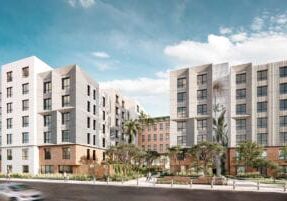
Mind the Gap: The Interface Between Onsite and Offsite Construction
Every design for manufacture and assembly (DfMA) project — modular, mass timber, or panelized — is really two projects joined at a seam. One is built in a controlled factory to millimeter tolerances; the other in the field, in weather, to the looser tolerances of poured concrete and human hands. Between them sits an interface: where the factory’s precision meets the site’s reality.
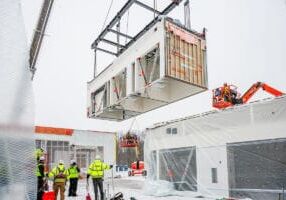
Rules, Rails & Repeatability: Applying DfMA to Modular Healthcare
DfMA offers several advantages for healthcare projects, with faster delivery among the most valuable. Schedule matters when building new facilities, expanding campuses, renovating existing space or bringing care closer to communities that need it.
Precision and Possibility: Demands of DfMA and What Modular Mass Timber Makes Possible
Mass timber does not automatically create an efficient modular building. Its precision makes early coordination more important: fabricated components will accurately reproduce both the team’s solutions and its mistakes. The material’s advantages are realized only when supported by an equally precise design and delivery process.
Catch It in the Factory, Not in the Field: Smarter Testing for Modular Builds
Integrating watertightness and airtightness testing into factory workflows transforms quality assurance from a reactive process into a proactive commissioning strategy. It ensures that every module shipped is field ready and resilient for transportation while also supporting the ability of the modular construction industry to make buildings better.
Modular Construction Contracts: Key Considerations for Successful Canadian Projects
Starting a modular project with a well-developed contract protects both the owner and the contractor. It will help keep the project on track and on budget, and it will improve quality from the factory floor to final installation on-site.
Modular by Design: Turning Architecture into a Manufacturing System
Modular construction is often presented as a faster way to build. Speed, however, is only one part of its value. The larger opportunity is to create a coordinated design and production system that improves quality, reduces uncertainty, and allows a building to move efficiently from concept design through manufacturing, transportation, installation, and completion.
Repeatability Begins with Trust: What Alora at Dry Creek Reveals About Scaling Modular Housing
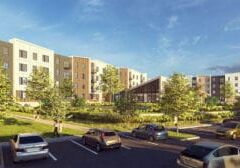
Alora at Dry Creek, a 329-unit, multifamily community comprising five four-story buildings in Centennial, Colorado, demonstrates how repeatable design, standardized manufacturing and early collaboration can work together to create a model that is not only faster to deliver, but easier to replicate across future projects.

T.R. Arnold: The Art of Third-Party Inspections
T.R. Arnold (TRA), a third-party inspection company in Elkhart, Indiana, contracts with modular manufacturers across the US. Manufacturers register with each state to which they intend to send their modules and may be required to hire a third-party inspection company.
Creating an ‘Ecosystem for Innovation:’ 50+ Years of Modular Construction Oversight in Virginia
Virginia’s modular building program began in 1973, with the implementation of the Virginia Industrialized Building Unit and Mobile Home Safety Regulations. Now it’s leading the country in modular code adoption.