
Viviendas modulares universitarias temporales para estudiantes - Ettrick, VA
El desafío
La Universidad Estatal de Virginia en Ettrick, Virginia, tuvo una clase de primer año más grande de lo normal para el otoño de 2023. Las normas de la universidad exigen que todos los estudiantes de primer y segundo año vivan en viviendas dentro del campus, por lo que el aumento de la matrícula hizo necesario disponer de más viviendas para estudiantes a tiempo para el inicio del curso escolar. Modular Genius, Inc. fue contratada a principios de primavera para proporcionar dormitorios modulares temporales para 268 estudiantes mediante un contrato estatal basado en un arrendamiento de 24 meses.
"Cuando recibimos el contrato a mediados de marzo, fue una carrera contrarreloj. Teníamos que diseñar, fabricar, obtener las autorizaciones estatales y entregar e instalar en poco más de cuatro meses. Un plazo bastante ajustado para 87 módulos y aproximadamente 50.000 pies cuadrados".
- Michael Whitehead, Director de Desarrollo Comercial

La solución
Modular Genius, Inc. diseñó y construyó tres complejos de dormitorios modulares temporales con 134 dormitorios, un total de 49.632 pies cuadrados. Los tres dormitorios modulares cuentan con una sala de lavandería compartida, cocina y sala de estar, duchas y baños para los residentes. Cada edificio de dormitorios provisionales cuenta también con una sala de rociadores, un armario informático y un armario para el conserje. Las residencias modulares se diseñaron para cumplir los requisitos del código residencial del estado de Virginia, con sistemas de rociadores y detectores de humo instalados por Modular Genius.
"El principal reto al que nos enfrentamos fue el tiempo, ya que no teníamos margen para retrasos. Afortunadamente, terminamos el proyecto en el plazo previsto y los estudiantes ocuparon los dormitorios justo a tiempo para el inicio de las clases."
- Albert Hayes, Director de Proyectos


Más de Modular Advantage
From Model to Machine: Why Modular Scale Is Becoming a Software Problem, not a Material One
For modular manufacturers that have already secured demand and repeatable volume, the next major constraint may no longer be forming capacity itself. Increasingly, it is the continuity of the information feeding that capacity.
Who Will Define Modular Products for AI?
Artificial intelligence is making building configurators easier and less expensive to create. This makes urgent manufacturers’ need portable product definitions, stable identities, and shared interfaces regardless of how others’ software is produced.
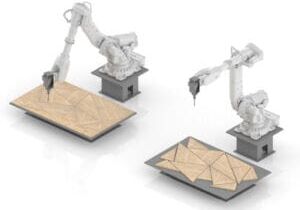
From BIM to Robotic Production: A Digital Workflow for Customized Components in Volumetric Modular Construction
For volumetric modular manufacturers, the value of this workflow is not simply the use of robotics. Its real value is continuity.
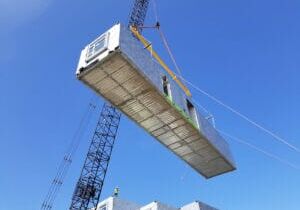
Helping Build a Common Framework for Modular Construction in Canada
Canada’s modular construction sector continues to gain momentum, but scaling it successfully will depend on shared expectations across design, manufacturing, approvals, and project delivery. CSA Z251 helps provide that common foundation.
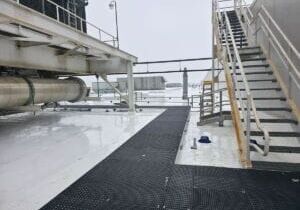
Edges, Exits & Equipment: A Modular Builder’s Guide to Rooftop Access
Rooftop access belongs in the factory design. Before the modules ship, the project team should identify each route’s users, confirm applicable requirements, coordinate with the roof system and structure, and assign responsibility.
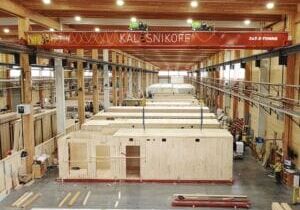
When Timber Production and Modular Construction Share One System
As demand for multifamily and workforce housing continues to outpace what conventional construction timelines can deliver, models that reduce the number of handoffs between structural fabrication and modular assembly are likely to draw more attention.
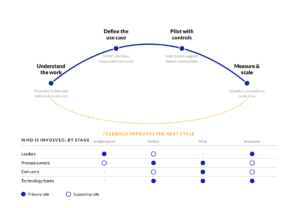
Your AI Strategy Is an Enablement Strategy
Tools will change. Teaching employees only the steps in one platform creates a narrow capability. Involving them in problem definition, process mapping, data assessment, controls, and measurement gives the organization a way to improve its systems as technology evolves.
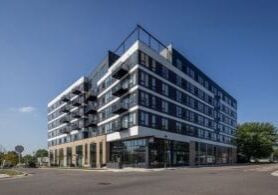
By-Right Permitting: The Missing Lever for Scaling Modular Multifamily
Modular has already proven it can outperform traditional building methods on speed and cost per unit. The next frontier is outside the factory in the front end of the process, where projects either clear a path to construction or get stuck in review.
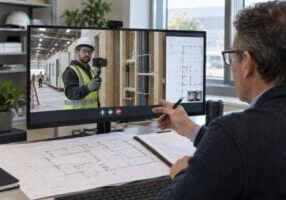
Remote Inspections and The Future of Factory Oversight
Remote inspection is becoming a practical part of modular construction oversight. Its value is greatest when it is used selectively, governed by clear procedures, and supported by complete traceability.
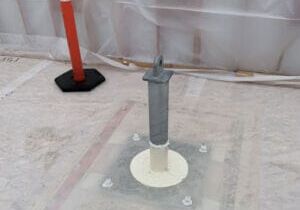
Reimagining Dry-In: How a Temporary-to-Permanent Roofing Strategy Mitigates Risk Between Modular Installation and Final Roof Construction
As volumetric modular projects continue to increase in scale and complexity, the Temporary-to-Permanent FiberTite Roof System represents an example of how traditional trade scopes can be reimagined through Design for Manufacturing and Assembly (DfMA) principles.