
This Year’s Offsite Construction Summits Put Regional Priorities and Industry Realities in Focus
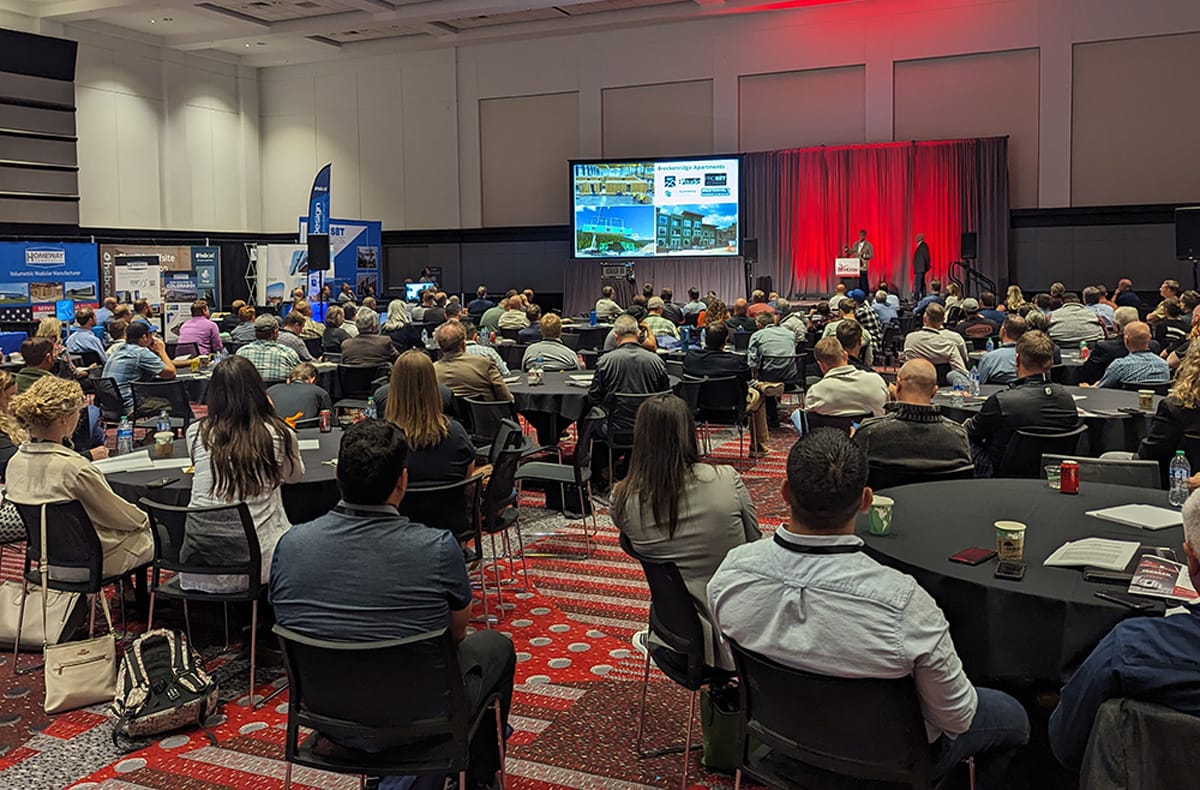
A modular building case study presentation at a previous Offsite Construction Summit.
The Offsite Construction Network’s 2026 slate of Offsite Construction Summits, sponsored by the Modular Building Institute, is more than a run of regional industry events. It is a snapshot of where offsite construction is gaining traction, where it still faces resistance, and where industry leaders see the greatest opportunity ahead.
With Summits scheduled for Toronto, Los Angeles, Denver, Washington, DC, and Houston, this year’s series will connect manufacturers, designers, developers, contractors, public officials, and end-users around the practical use of offsite delivery in their own markets.
While each event has its own emphasis, Toronto’s Summit on June 4 will spotlight offsite solutions for housing, healthcare, and education while bringing together regional and national companies, federal and provincial government officials, and end-users already embracing offsite construction. In a Canadian market shaped by urgent housing demand and growing policy attention to industrialized construction, the Offsite Construction Summit in Toronto is more than just an industry expo: it’s a strategic conversation about what it will take to move modular from momentum to scale.
Why Toronto Matters Right Now
The Toronto Summit arrives as Canada’s modular and offsite sectors move closer to the center of the housing conversation. Build Canada Homes has explicitly highlighted modern methods of construction (MMC), including modular, panelized, and prefabricated systems, as part of its push to accelerate housing delivery.
“What’s different now,” says Will Meneray, Manager Construction Innovation at Build Canada Homes (BCH) and one of the speakers at the Toronto Summit, “is that BCH is designed to create scale, certainty, and coordination at the same time. Unlike past efforts that were fragmented across programs, Build Canada Homes brings public land, flexible financing, development expertise, and modern construction priorities under one roof.
“That structure allows the federal government to move beyond pilots toward repeatable delivery, while creating predictable demand for modern methods of construction, including volumetric modular, prefabricated modules, digitization, and other approaches. This moment is less about testing ideas and more about aligning partners around delivery – faster, smarter, and at scale.”
And beyond housing, Canada is committing billions to MMC projects across the defense, healthcare, and education sectors. That political landscape gives the Toronto Summit added weight. This is where the market can examine how Canada’s ambitions are aligning with project delivery, manufacturing economics, procurement realities, and code compliance.
That is part of what makes the event valuable to attendees. Developers can better understand modular project workflows. Public officials can hear directly from industry about what policy supports scale and what gets in the way. Manufacturers and suppliers can engage with buyers and end-users looking for solutions. Owners in housing, healthcare, and education can get a clearer picture of how offsite can shorten schedules and improve predictability when it is implemented correctly.
Design Decisions Make or Break Modular Projects
That point is central to another of the Toronto Summit presentations. Eisa J. Lee, Partner Architect at xL Architecture + Modular Design, plans to focus on the early decisions that often determine whether a modular project succeeds or unravels.
“The construction aspect of modular projects are great because you have more control in off-site settings. What typically goes wrong is during the design phase because many teams approach modular projects using conventional design practices, where they think some key decisions can be deferred until later stages.”
Many teams still approach modular as if it were simply a faster version of conventional construction. Lee argues that this is exactly where trouble starts.
“Once production begins, there's no turning back without hefty cost implications.”
For architects, engineers, developers, and contractors, the value of this session is practical. Lee offers a framework for reordering the process so that dimensional strategy, structural coordination, and code compliance are addressed early enough to protect cost and schedule.
“Critical decisions around dimensional frameworks, system coordination, and code compliance need to be addressed from day 1 during the concept stage. It's less about designing faster, and more about designing in the right order, with the correct constraints understood from the outset.”
She also points to MEP coordination as one of the most common trouble spots.
“MEP zoning is often where teams struggle the most, largely because it's the least visible early on but the most restrictive later.”
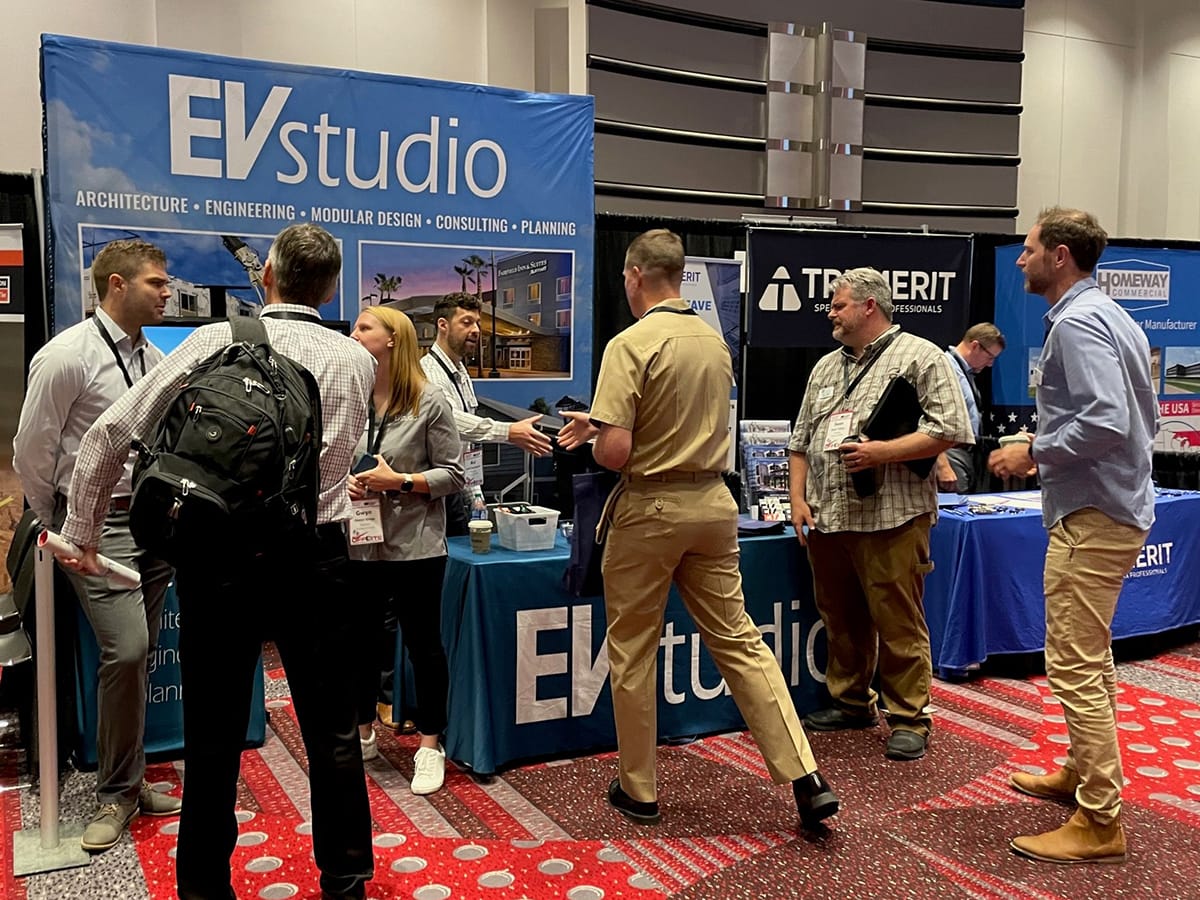
Each Offsite Construction Summit emphasizes networking and business development between regional companies and end users.
Modular’s Promise Depends on Business Reality
Another Toronto session will confront the economics that still challenge offsite delivery. Sabrina Fiorellino and Geoff Cowper-Smith of Fero International plan to address why modular remains difficult to execute profitably.
“One of the reasons that offsite construction is so difficult to execute profitably is because many teams underestimate the upfront and ongoing fixed costs such as factory overhead. Modular only becomes profitable when there is volume/scale.”
They also challenge one of the industry’s most persistent myths.
“Modular construction is simply construction moved indoors. It isn’t. It’s a manufacturing business layered onto a project-based industry—and those economics behave very differently.”
That distinction matters to developers, lenders, public-sector owners, and manufacturers alike.
“Speed creates value only if the entire value chain is aligned—design, approvals, procurement, financing, and site readiness.”
Five Cities, Five Distinct Conversations
That practical value carries through the rest of the 2026 Offsite Construction Summit slate.
Los Angeles on June 23 is centered on offsite and modular housing, with a focus on delivering multifamily housing scale. Denver on September 10 takes a broader institutional view, focusing on affordable housing, healthcare, and education while also offering an exclusive factory tour from a leading Colorado modular company. Washington, DC, on November 19 brings policy and infrastructure into sharper focus, with attention to housing, healthcare, and critical infrastructure supporting Northern Virginia’s data center hub. Houston on December 9 is the most industrially oriented of the five, with programming aimed at oil and gas infrastructure, workforce housing, data centers, and other industrial-use structures.
Why These Summits Matter
Taken together, the 2026 Offsite Construction Summits offer region-specific insight into where offsite is creating value, what still blocks adoption, and how industry participants can respond. For manufacturers, they open doors to buyers, partners, and policymakers. For architects, engineers, contractors, and developers, they offer practical guidance that can improve coordination, reduce risk, and strengthen project outcomes. For government officials and institutional owners, they provide a clearer view of how offsite can support housing, healthcare, education, and infrastructure goals when policy and delivery are aligned.
Just as important, these Summits create value for end-users. Housing providers, healthcare systems, school leaders, and industrial operators all stand to benefit when projects are delivered faster, with more certainty, and with better alignment between design, production, and installation.
These opportunities are the bigger promise behind this series. The Offsite Construction Summits are not just chances for the industry to talk to itself. They are places where stakeholders across the construction chain, and the people who ultimately rely on the buildings it delivers, can see how offsite moves from idea to execution.
Más de Modular Advantage
Mind the Gap: The Interface Between Onsite and Offsite Construction
Every design for manufacture and assembly (DfMA) project — modular, mass timber, or panelized — is really two projects joined at a seam. One is built in a controlled factory to millimeter tolerances; the other in the field, in weather, to the looser tolerances of poured concrete and human hands. Between them sits an interface: where the factory’s precision meets the site’s reality.
Rules, Rails & Repeatability: Applying DfMA to Modular Healthcare
DfMA offers several advantages for healthcare projects, with faster delivery among the most valuable. Schedule matters when building new facilities, expanding campuses, renovating existing space or bringing care closer to communities that need it.
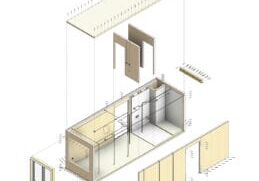
Precision and Possibility: Demands of DfMA and What Modular Mass Timber Makes Possible
Mass timber does not automatically create an efficient modular building. Its precision makes early coordination more important: fabricated components will accurately reproduce both the team’s solutions and its mistakes. The material’s advantages are realized only when supported by an equally precise design and delivery process.
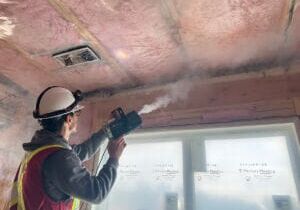
Catch It in the Factory, Not in the Field: Smarter Testing for Modular Builds
Integrating watertightness and airtightness testing into factory workflows transforms quality assurance from a reactive process into a proactive commissioning strategy. It ensures that every module shipped is field ready and resilient for transportation while also supporting the ability of the modular construction industry to make buildings better.
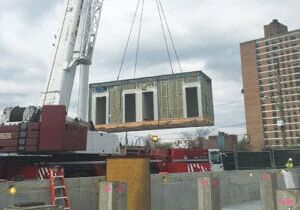
Modular Construction Contracts: Key Considerations for Successful Canadian Projects
Starting a modular project with a well-developed contract protects both the owner and the contractor. It will help keep the project on track and on budget, and it will improve quality from the factory floor to final installation on-site.
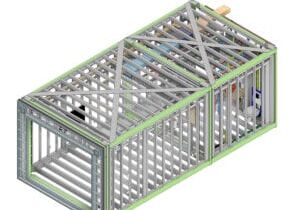
Modular by Design: Turning Architecture into a Manufacturing System
Modular construction is often presented as a faster way to build. Speed, however, is only one part of its value. The larger opportunity is to create a coordinated design and production system that improves quality, reduces uncertainty, and allows a building to move efficiently from concept design through manufacturing, transportation, installation, and completion.
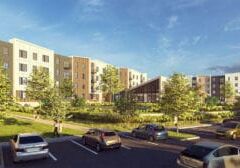
Repeatability Begins with Trust: What Alora at Dry Creek Reveals About Scaling Modular Housing
Alora at Dry Creek, a 329-unit, multifamily community comprising five four-story buildings in Centennial, Colorado, demonstrates how repeatable design, standardized manufacturing and early collaboration can work together to create a model that is not only faster to deliver, but easier to replicate across future projects.

T.R. Arnold: The Art of Third-Party Inspections
T.R. Arnold (TRA), a third-party inspection company in Elkhart, Indiana, contracts with modular manufacturers across the US. Manufacturers register with each state to which they intend to send their modules and may be required to hire a third-party inspection company.

Creating an ‘Ecosystem for Innovation:’ 50+ Years of Modular Construction Oversight in Virginia
Virginia’s modular building program began in 1973, with the implementation of the Virginia Industrialized Building Unit and Mobile Home Safety Regulations. Now it’s leading the country in modular code adoption.
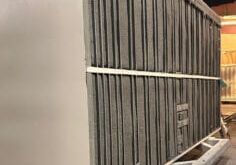
Understanding Thermal Barriers Compliance Methods & Emerging NFPA-275 Foam Plastic Technologies
New fire barrier technologies are improving total costs and margins in major areas of construction, such as commercial, government, union and prevailing wage projects. These benefits translate into other large fringe areas, such as agriculture, commercial cold storage facilities, grow houses, outbuildings, military and aviation hangars.